
USD, $

FOX v.1.4.1.9
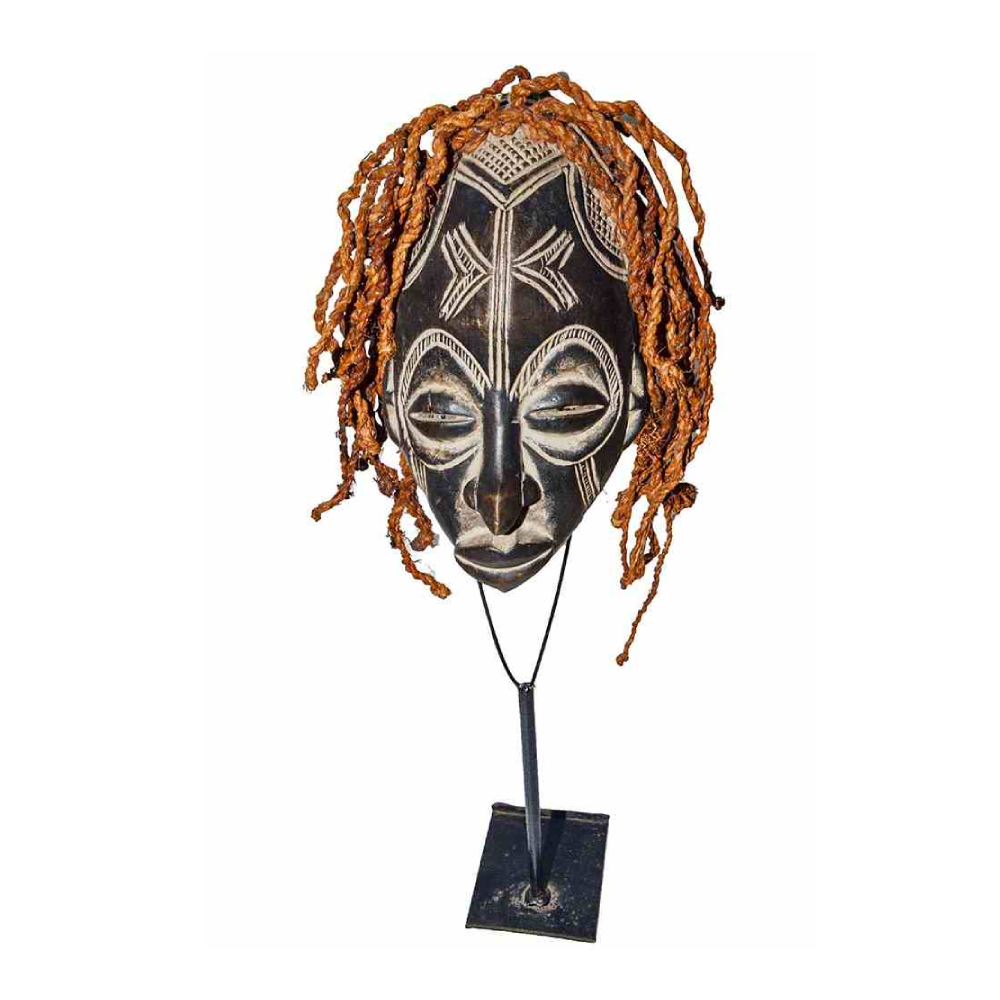
$ 19,350.00
| Country of Origin | Congo, Angola- Africa |
|---|---|
| Type | African Mask |
| Material | African Wood |
| Approx Age | 20th Century |
| Care Instructions | Handcrafted pieces of Art come with natural aberrations & cracks being wood. |
| Use | Home & Office Decor, Artistic Display. |
| Overall Condition | Being antique & hand carved, possible minor imperfections and wear & tear, including but not limited to scuffing, cracking and minimal chipping. Possible previous repairs. Pls inquire for more details. |
Masks are a window into the soul of a culture, and provide us with great conversation pieces for the home. African masks are possibly the most admired and well known art form of Africa. They are both idea and form. The artistry of African masks is self evident but, for the people who create them, they have a much deeper meaning than surface beauty. African Masks are believed to embody the spirit and symbolize a message of wisdom, prosperity, security, and power. Stylish elements in a mask’s looks are codified by the tradition and may either identify a specific community or convey specific meanings. Putting on a mask is a transformative experience. It allows us to be someone we’re not for a moment, changing both how we see ourselves and how we behave outwardly. Many of us know this feeling from Halloween in America, but it’s a universal feeling shared across cultures throughout human history.
“Chokwe sculptors were the most famous of the region. They made wood figures, masks for the family shrines, and all other objects used for hunting, love, magic, and fertility. They sculpted scepters, thrones with figurines, fans, tobacco boxes, pipes, flyswats, cups, and figures of chiefs or ancestors – all demonstrating a great deal of refinement. They were famous for their large statues of deified ancestors, exalting strength and dignity. The most powerful and important Chokwe mask is known as chikunga (as shown in fig.). Highly charged with power and considered sacred, chikunga is used during investiture ceremonies of a chief and sacrifices to the ancestors. These masks are made of barkcloth stretched over an armature of wickerwork, covered over with black resin and painted with red and white designs. Chikunga is worn only by the current chief of a group.”
| Weight | 1.50 kg |
|---|---|
| Dimensions | 3 × 9 × 11 cm |


Reviews
There are no reviews yet.