
USD, $

FOX v.1.4.9

$ 19,350.00
| Country of Origin | Gabon |
|---|---|
| Type | African Mask |
| Material | Sese Wood |
| Care Instructions | Handcrafted pieces of Art come with natural aberrations & cracks being wood. |
| Use | Good Collectible, Home & Office Decor, Artistic Display. |
| Overall Condition | Being antique & hand carved, possible minor imperfections and wear & tear, including but not limited to scuffing, cracking and minimal chipping. Possible previous repairs. See photos or inquire for more details. |
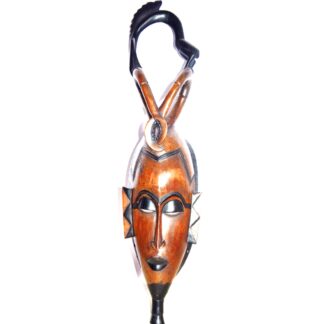
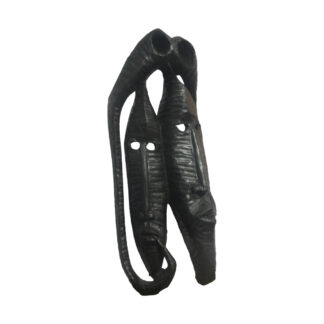
Masks are a window into the soul of a culture, and provide us with great conversation pieces for the home. African masks are possibly the most admired and well known art form of Africa. They are both idea and form. The artistry of African masks is self evident but, for the people who create them, they have a much deeper meaning than surface beauty. African Masks are believed to embody the spirit and symbolize a message of wisdom, prosperity, security, and power. Stylish elements in a mask’s looks are codified by the tradition and may either identify a specific community or convey specific meanings. Putting on a mask is a transformative experience. It allows us to be someone we’re not for a moment, changing both how we see ourselves and how we behave outwardly. Many of us know this feeling from Halloween in America, but it’s a universal feeling shared across cultures throughout human history.
“African handcrafted Fang masks that are hand carved out of wood in the bright colors of yellow,blue and orange. The Fang mask originates from the Fang tribal people that are spread over a vast area along the Atlantic coast line of equatorial Africa and can be found in Cameroon equatorial Guinea and Gabon. Among the Fang, these type of masks identify to the Ngil Society and are known for their elegant abstractions of the human face. They were meant to protect. They are often of great aesthetic quality, which suggests that they are the culmination of a long sculptural tradition. Ngil African Masks have been described as having a ‘heart-shaped face’ due to the facial features emphasizing refined curves of the orbital ridges above the eyes and the prominent line of the tapered nose that ended above the open mouth completing the abstraction of the face.The Fang people used masks in their secret societies. Members of this male society wore the masks during the initiation of new members and the persecution of wrongdoers. A sculptural interpretation of the ancestor pared down solely to the head, they became a source of fascination as early as the 1910s and 1920s for some of the most prominent pioneers of African art. The Fang are best known for their wooden reliquary figures which are abstract anthropomorphic carvings.”
| Weight | 1.25 kg |
|---|---|
| Dimensions | 3.5 × 5.5 × 23 cm |

Reviews
There are no reviews yet.